DSSERVO DS3225SG Servo, 25kg-Class Coreless Digital
DSSERVO DS3225SG is a 25kg-class waterproof coreless digital servo for RC cars and robotics. It provides up to 30 kg·cm stall torque at 8.4 V, with PWM control and IP66-rated protection.
| Model | DS3225SG |
|---|---|
| Brand | DSSERVO |
| Motor | Coreless |
| Operating voltage | 5–8.4 V |
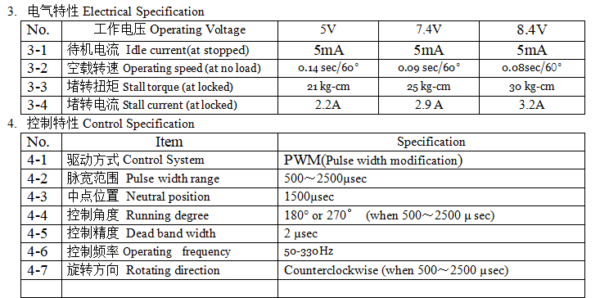
| Stall torque | 21 kg·cm at 5 V; 25 kg·cm at 7.4 V; 30 kg·cm at 8.4 V |
| No-load speed | 0.14 sec/60° at 5 V; 0.09 sec/60° at 7.4 V; 0.08 sec/60° at 8.4 V |
| Stall current | 2.2 A at 5 V; 2.9 A at 7.4 V; 3.2 A at 8.4 V |
| Control | Digital PWM; 500–2500 µs; 50–330 Hz |
| Control travel | 180° or 270° per supplied diagram; configuration dependent |
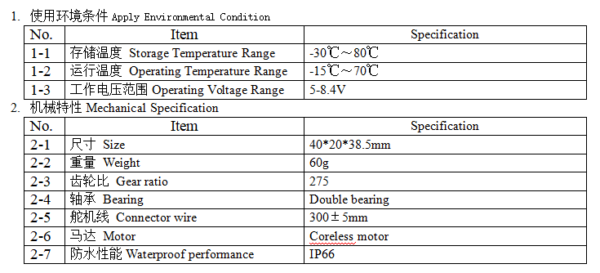
| Protection | IP66 |
| Gear ratio | 275:1 |
| Dimensions and weight | 40 × 20 × 38.5 mm; 60 g net weight |
Description
DS3225SG servo by DSSERVO is a 25kg-class coreless digital servo for RC vehicle steering and robotics projects. The supplied specification lists up to 30 kg·cm stall torque at 8.4 V. The 25kg model class and the maximum torque rating are stated at different operating conditions; torque, speed and current change with supply voltage.
Coreless digital servo with IP66 protection
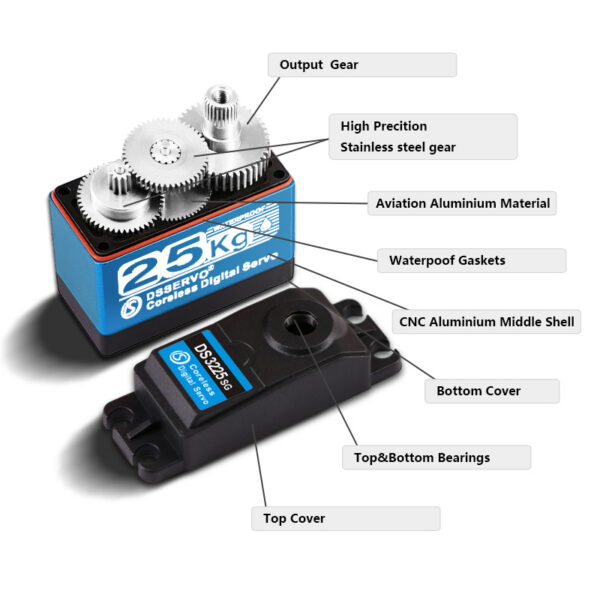
The DS3225SG combines a coreless motor, stainless-steel gear components, a CNC aluminum middle case, double bearings and waterproof gaskets. Its supplied product data identifies IP66 protection. Treat this as the stated protection rating for the servo assembly; the documentation does not specify an immersion rating. Protect the connector and cable entry in the finished installation, and do not use the IP66 label as a submersion claim.
Torque, speed and current by voltage
| Supply voltage | Stall torque | No-load speed | Stall current |
|---|---|---|---|
| 5 V | 21 kg·cm | 0.14 sec/60° | 2.2 A |
| 7.4 V | 25 kg·cm | 0.09 sec/60° | 2.9 A |
| 8.4 V | 30 kg·cm | 0.08 sec/60° | 3.2 A |
Use a regulated supply within the specified 5–8.4 V range. The listed stall-current figures reach 3.2 A at 8.4 V, so size the receiver BEC or servo regulator for the expected load and transient current. Do not power the servo from a microcontroller GPIO pin. Stall torque and stall current describe locked-shaft conditions, while the speed values are no-load figures; they are not continuous-load performance guarantees.
Mechanical fit and construction
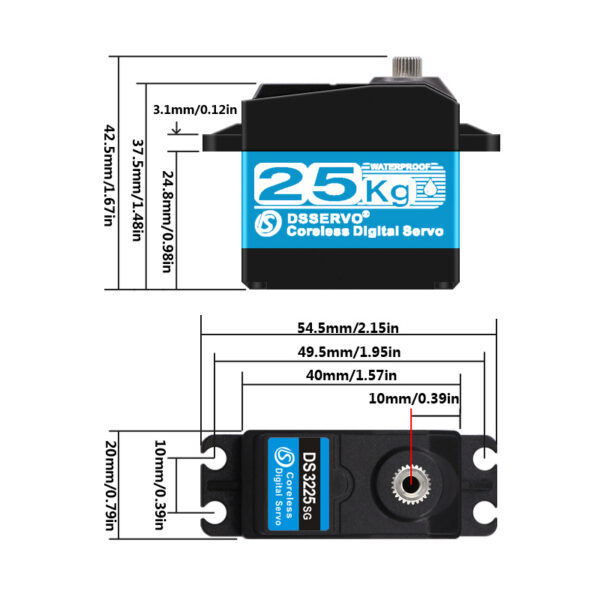
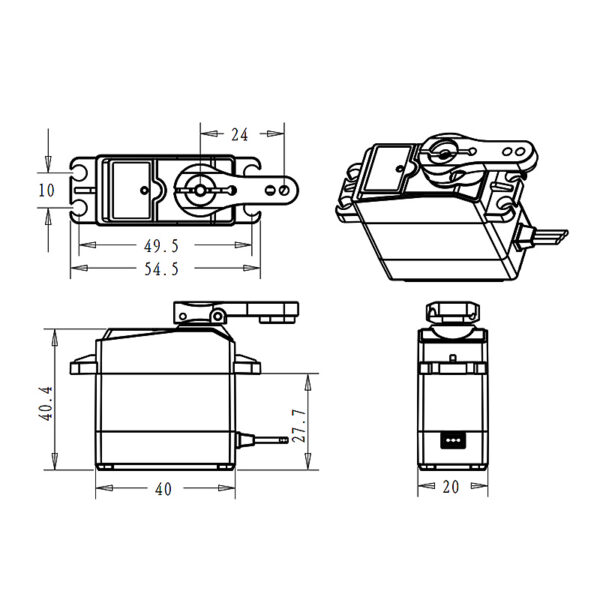
The mechanical specification lists a 40 × 20 × 38.5 mm servo body, 60 g net weight, 275:1 gear ratio, double bearings and a 300 ± 5 mm lead. The dimension graphics also show a 54.5 mm overall mounting-tab width and a 42.5 mm maximum height including the output spline; use the supplied drawing to check your available envelope and hole spacing. Confirm the output spline and horn fit before assembly. The included adjustable arm is described as 25T in the supplier package list, but match the spline against your actual linkage before relying on it.
The illustrated gear assembly identifies a stainless-steel output gear, precision stainless-steel gears, an aluminum middle shell and bearings at the top and bottom. Check the mounting, linkage and power supply against the intended load.
PWM control and wiring
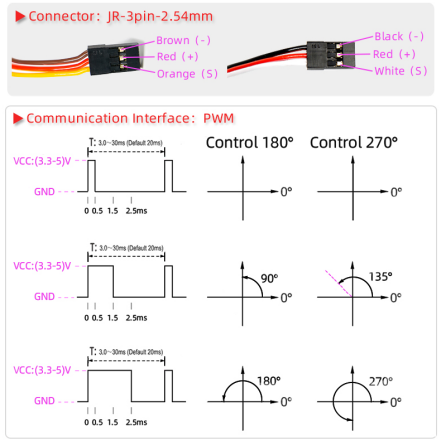
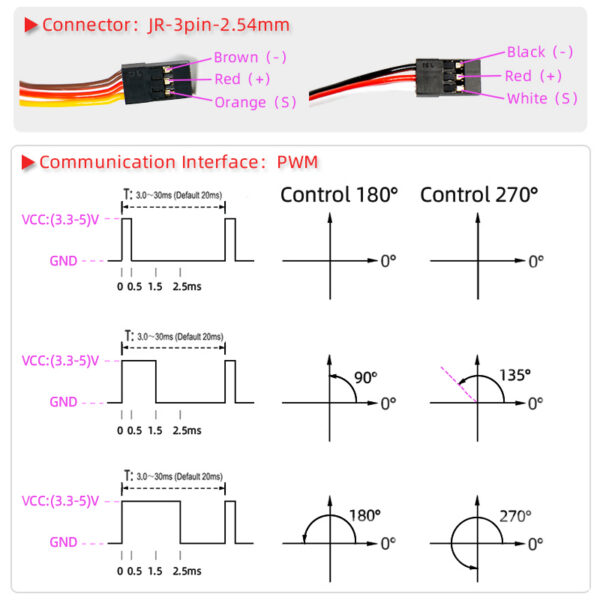
This digital servo uses PWM control with a 500–2500 µs pulse range, a 1500 µs neutral position, a 2 µs deadband and a listed operating frequency of 50–330 Hz. The supplied control diagram shows 180° or 270° travel across the pulse range. Actual travel depends on the servo configuration and the controller’s pulse endpoints, so verify the required range before connecting the linkage.
The product diagram shows a JR-style 3-pin, 2.54 mm connector. It labels brown or black as ground, red as positive supply, and orange or white as signal for the cable versions illustrated. Cable colors can vary between batches; check the matching diagram and verify connector polarity before powering the unit. Incorrect polarity can damage the servo or connected electronics.
Typical applications and setup
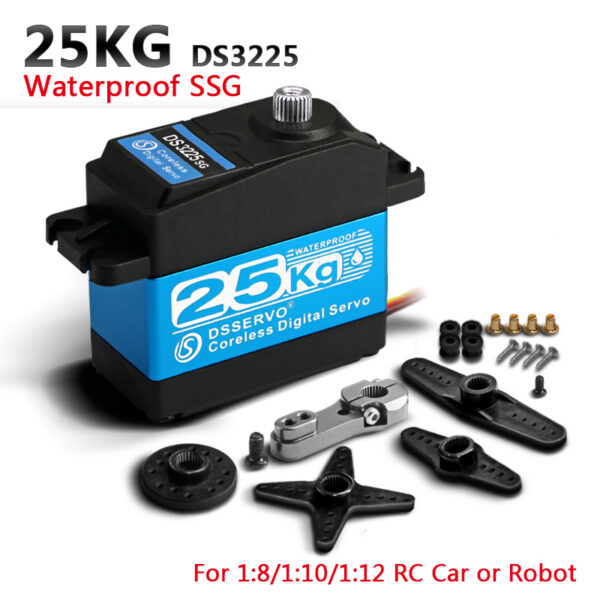
The product graphics identify 1:8, 1:10 and 1:12 RC cars and robots as intended applications. Whether the DS3225SG fits a particular steering or robot joint depends on required force, linkage leverage, mounting geometry, spline compatibility, controller voltage, signal frequency and desired travel. Compare those requirements with the table and drawing before ordering. For first power-up, use a supported voltage and check direction and endpoints with the mechanism unloaded or the linkage disconnected. Adjust endpoints so the mechanism does not bind at either end of travel.
Package contents
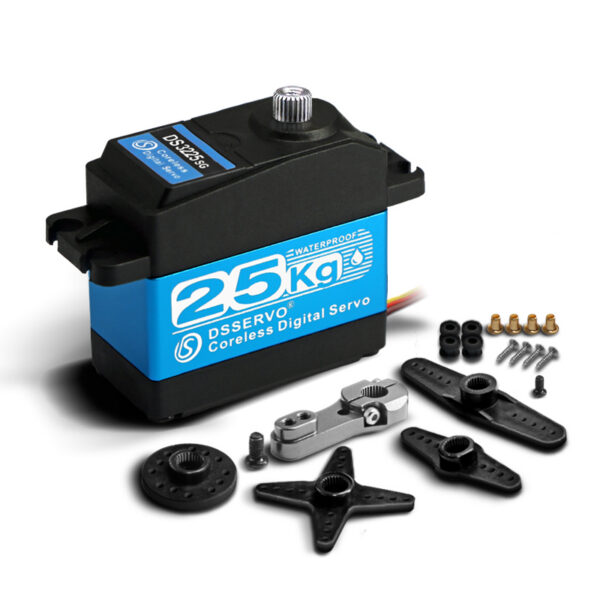
The supplier quotation row matching the Coreless DS3225 family lists one DS3225 digital metal servo, one 25T adjustable metal servo arm and one accessory set as pictured. The quotation does not enumerate accessory quantities. The product images show several horns and small mounting parts; contact the seller before purchase if a particular screw, horn shape or quantity is essential to your build.
Frequently asked questions
Is the DS3225SG a 25kg-cm servo? It is marketed as a 25kg-class model. The supplied electrical table lists 21 kg·cm at 5 V, 25 kg·cm at 7.4 V and 30 kg·cm at 8.4 V under stall conditions.
Can I use it at 8.4 V? The supplied operating range is 5–8.4 V. Keep the supply within this range and ensure it can provide the current required by the connected load.
Does the 270° figure guarantee 270° travel? No. The diagram shows 180° or 270° control options over the stated pulse range, but actual travel is configuration and controller dependent. Confirm travel and set endpoints for your mechanism.
Can it be submerged? The specification lists IP66 but does not give an immersion rating. Do not treat this product data as approval for underwater use.
Additional information
| Model | DS3225SG |
|---|---|
| Brand | DSSERVO |
| Motor | Coreless |
| Operating voltage | 5–8.4 V |
| Stall torque | 21 kg·cm at 5 V; 25 kg·cm at 7.4 V; 30 kg·cm at 8.4 V |
| No-load speed | 0.14 sec/60° at 5 V; 0.09 sec/60° at 7.4 V; 0.08 sec/60° at 8.4 V |
| Stall current | 2.2 A at 5 V; 2.9 A at 7.4 V; 3.2 A at 8.4 V |
| Control | Digital PWM; 500–2500 µs; 50–330 Hz |
| Control travel | 180° or 270° per supplied diagram; configuration dependent |
| Protection | IP66 |
| Gear ratio | 275:1 |
| Dimensions and weight | 40 × 20 × 38.5 mm; 60 g net weight |
Custom Parts for Your Project
Ask about CNC machining or 3D printing for your part.
Custom CNC Parts
Send a drawing or CAD file, material, quantity, finish requirements, and application.
Request a Quote3D Printed Parts
Send a drawing or 3D file, quantity, intended use, and material or finish requirements.
Request a Quote